
Helical Pilings Reinforce Second-Story Expansion at Historic Tween Waters Island Resort, Captiva, Florida
Preserving a Coastal Landmark Through Modern Foundation Engineering
What Prompted Foundation Reinforcement at Tween Waters Island Resort?
Located between the Gulf of Mexico and Pine Island Sound, Tween Waters Island Resort is a beloved Captiva landmark dating back to the 1930s. The resort’s original wood-framed lodges and cottages were designed for one-story occupancy — never intended to support modern loads from vertical expansion.
When resort owners planned to add a second story for additional guest suites, engineers identified insufficient load-bearing capacity in the original shallow foundations. The site’s soft coastal sands, high groundwater, and proximity to tidal zones required a deep foundation solution that could provide reliable capacity without vibration or environmental disturbance.
Coastal Foundation Solutions was selected to design and install helical pilings to underpin the existing structure and safely transfer loads from the new upper level into competent bearing strata below.
Project Details:
- Location: Tween Waters Island Resort, Captiva Island, FL
- Project Type: Structural Reinforcement for Vertical Addition
- Completion Date: April 2024
- Client: Sanibel Captiva Beach Resorts
- Engineer of Record: Coastal Foundation Solutions
How Did Engineers Evaluate the Existing Foundation?
Before construction, engineers performed a structural and geotechnical evaluation to determine how best to support the planned second-story addition.
Soil borings revealed loose sands extending 12–15 feet deep, transitioning to denser sand and shell strata around 25 feet below grade. The existing timber post foundation, although well-preserved, could not sustain the additional axial and lateral loads from a second floor.
What Were the Key Structural Challenges?
- Limited bearing capacity in upper soil layers
- Historic building restrictions preventing heavy equipment or excavation
- Tidal influences and high groundwater beneath the structure
- Tight access zones between existing cottages and landscaped areas
Why Was a Helical Foundation Chosen?
Helical pilings offered several decisive advantages for the project:
- No vibration or ground disturbance near fragile structures
- Compact installation using small hydraulic drives
- High compression and tension capacity for vertical and uplift loads
- Immediate load testing during installation for on-site verification
How Were Helical Pilings Used to Reinforce the Existing Foundation?
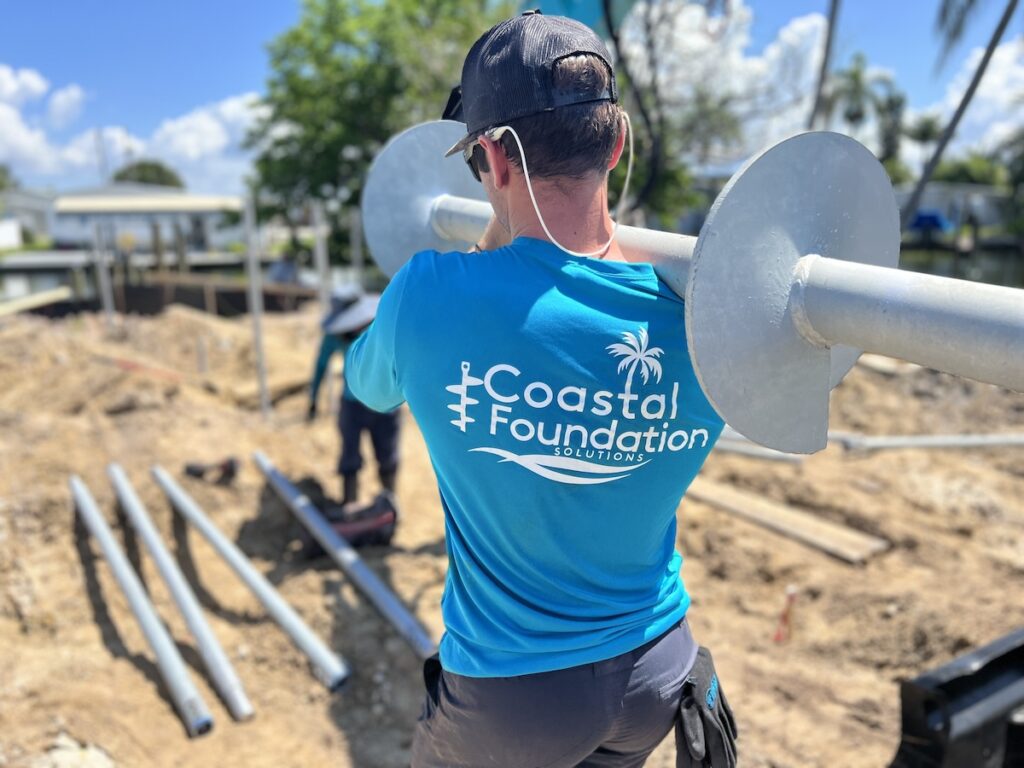
Coastal Foundation Solutions designed a system of RS3500 helical pilings to supplement the original foundation. Each pile was strategically positioned beneath key load points — including structural columns, beam intersections, and future wall lines.
Pile Specifications:
- Type: RS3500 Round Shaft Helical Piles
- Helix Configuration: 8”–10”–12” triple-helix
- Material: Hot-dip galvanized steel for marine protection
- Design Load: 30 tons (compression), 10 tons (tension)
- Average Depth: 28–32 feet
The pile layout ensured even load transfer across the structure, minimizing differential settlement and providing a uniform base for the second-story framing system.
How Were the Helical Pilings Installed Without Disrupting Resort Operations?
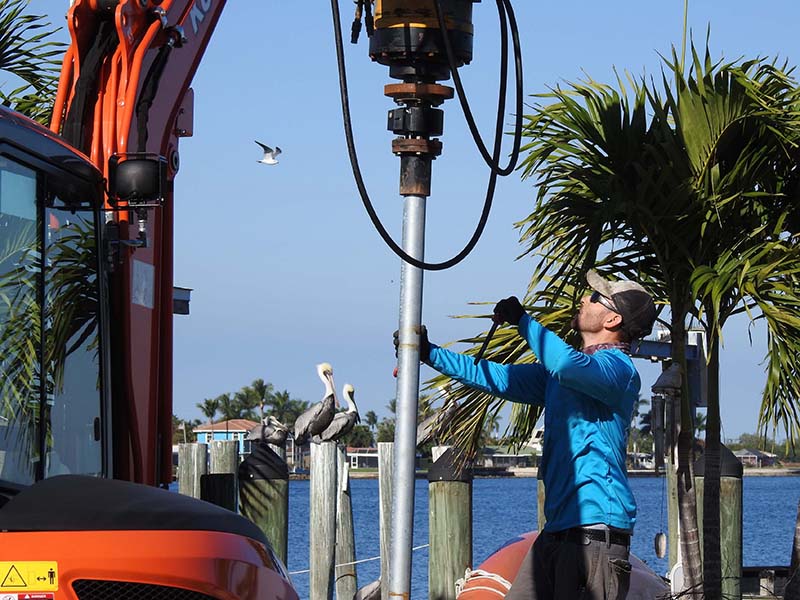
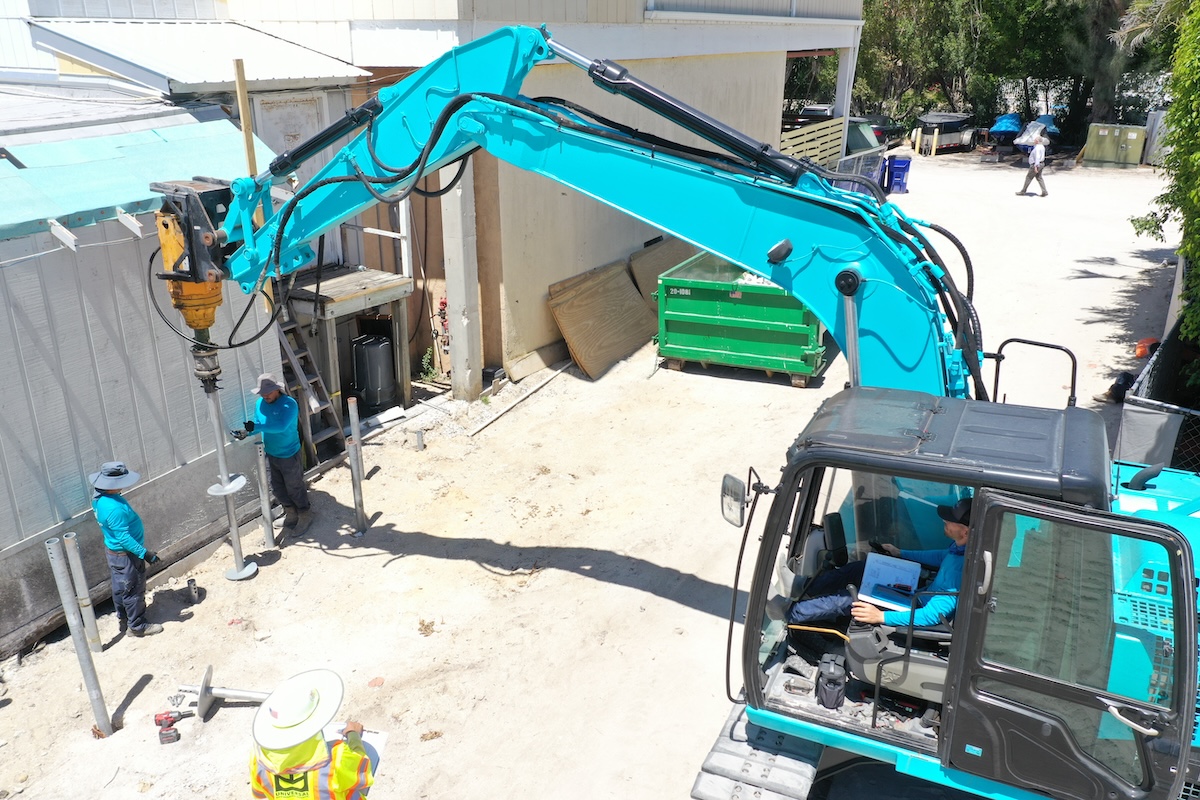
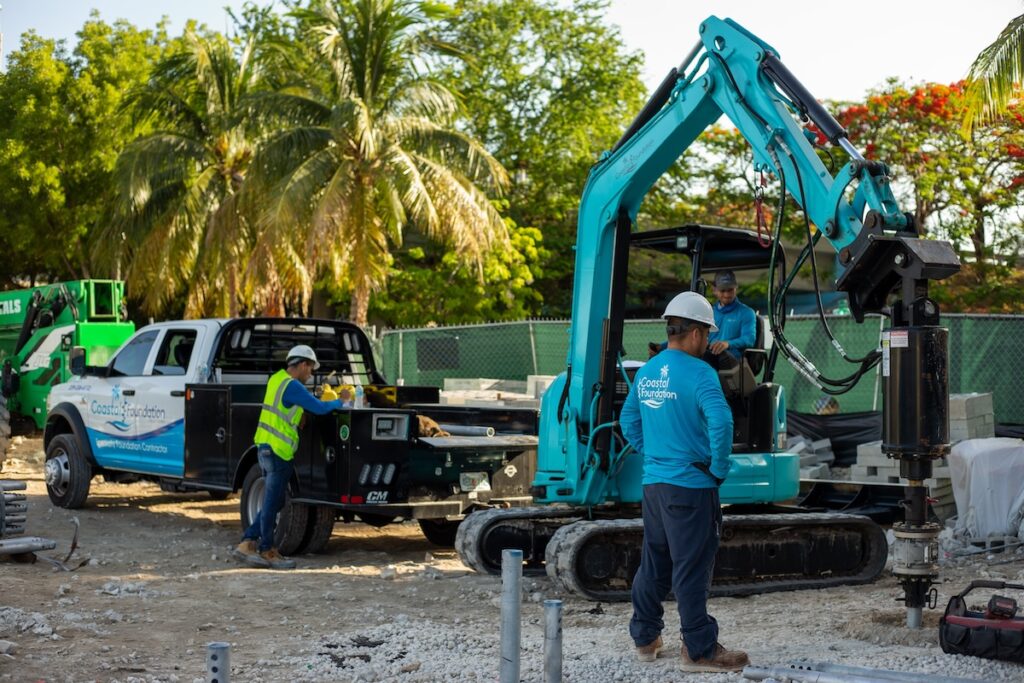
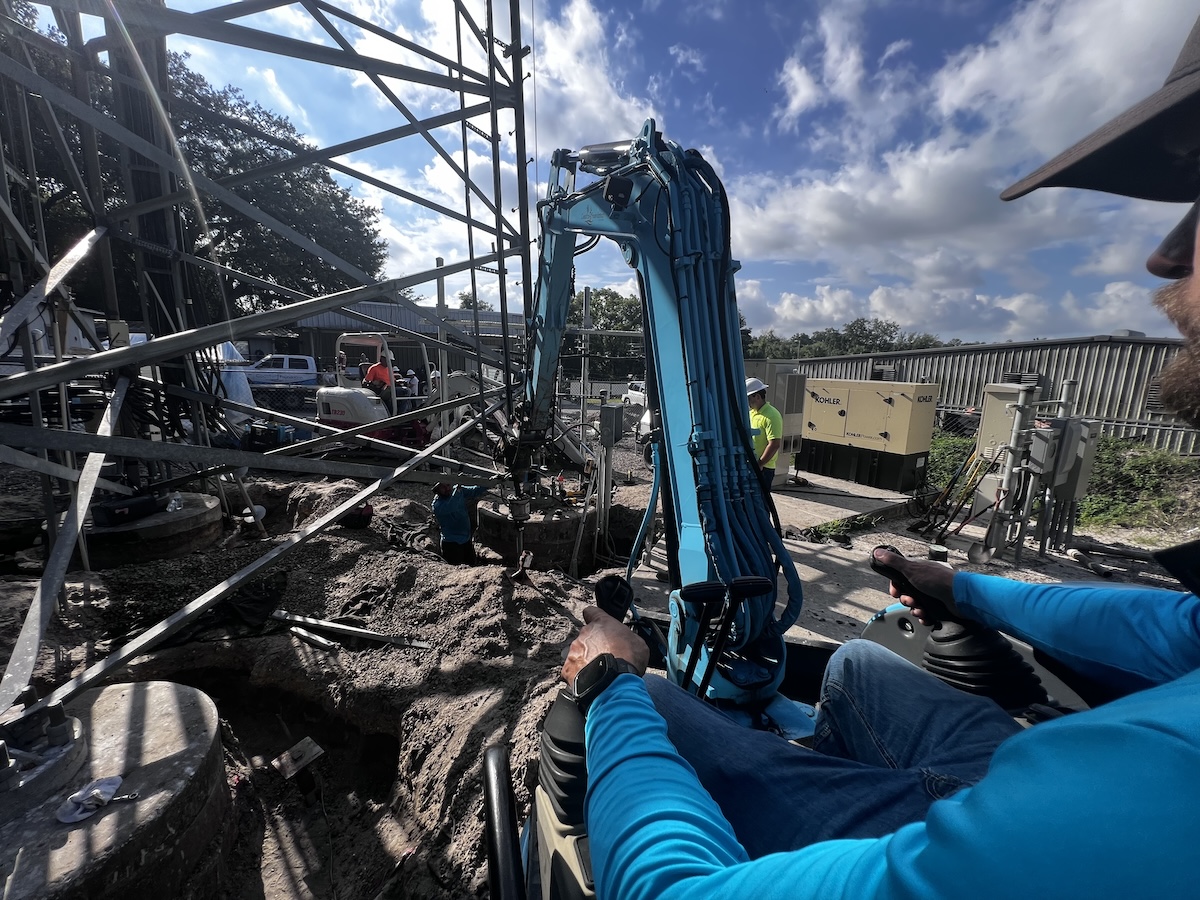
Tween Waters remained open throughout construction — requiring quiet, low-impact installation. The Coastal Foundation Solutions team utilized compact hydraulic equipment that operated beneath the existing structure with minimal clearance.
Step 1: Mobilization and Layout
Engineers marked 32 pile locations around the building perimeter and interior column lines. Lightweight drive heads were mobilized to each access point using hand carts to protect walkways and landscaping.
Step 2: Pile Installation
Each helical piling was advanced to refusal torque using a 12,000-ft/lb drive motor. Torque readings confirmed design capacity of 30 tons per pile. All piles were installed within a three-day period — with zero vibration or soil spoils.
Step 3: Bracket Connection
Heavy-duty steel underpinning brackets were attached to existing foundation beams, transferring load to the new deep foundation system.
Step 4: Load Testing and Verification
Proof testing was conducted on 10% of installed piles. Compression load tests validated torque-to-capacity correlations and confirmed zero deflection under design load.
What Challenges Were Overcome During Installation?
- Tight Access Around Historic Structures
The project required precision maneuvering within 5–6 feet of existing walls. Compact, hand-guided drive heads and sectional pile shafts allowed installation in these confined spaces. - High Groundwater and Tidal Influence
Tidal fluctuations introduced hydrostatic pressure during installation. Temporary sump pumps were used to maintain dry working conditions. - Preserving Historic Integrity
As a designated historic resort, the construction plan required no modification to visible exterior components. All work was performed beneath floor framing or behind existing walls.
What Results Did the Helical Piling System Deliver?
The completed system provided immediate structural stability for the vertical expansion, enabling contractors to proceed with framing the new second story within two weeks of pile installation.
Performance Summary:
- 32 helical piles installed to an average depth of 30 feet
- Compression capacity: 30 tons per pile
- No vibration, no excavation, zero settlement
- Preserved original timber structure without alteration
- Enhanced load-bearing performance for multi-story expansion
Post-construction monitoring confirmed no measurable movement or deflection — validating the design’s success in transferring additional loads safely to deeper strata.
Why Helical Pilings Are Ideal for Coastal and Historic Structures
Helical pilings are now the preferred foundation system for coastal retrofits, historic renovations, and vertical expansions in Southwest Florida.
Advantages include:
- Installation in restricted-access or low-clearance environments
- No vibration — safe for fragile or historic structures
- Corrosion-resistant galvanized steel
- Immediate load-bearing capacity
- Adaptability to soft, sandy, or tidal soils
For properties like Tween Waters, they provide a modern solution that respects architectural heritage while delivering 21st-century performance.
Frequently Asked Questions: How Do Helical Pilings Support Historic Structures in Florida?
What makes helical pilings suitable for older buildings?
They can be installed beneath or around existing foundations without excavation, allowing engineers to retrofit support beneath fragile or historic structures.
How do helical piles perform in sandy coastal soils?
Can they be used to support new floors or vertical additions?
Yes — helical piles can transfer additional loads from upper floors to deeper bearing layers, making them ideal for expansions like second-story additions.
Are helical pilings environmentally friendly?
How long do helical foundations last in saltwater environments?
Let’s Build You a Safer Foundation
Request a Free Evaluation Today
Is your Bonita Beach or Southwest Florida home showing signs of settlement, erosion, or seawall failure?
Protect your investment with Florida’s most trusted foundation repair experts.