
Expert Micropile Installation Services
Precision Deep Foundation Solutions by Coastal Foundation Solutions
At Coastal Foundation Solutions, we provide advanced micropile installation services designed for today’s most demanding construction challenges. Whether you’re building in tight urban environments, retrofitting aging infrastructure, or stabilizing sloped terrain, micropiles offer a high-performance, low-impact foundation option that delivers exceptional strength in virtually any soil condition.
Engineered for both new construction and foundation upgrades, micropiles are ideal for sites where traditional deep foundations fall short. With our in-house expertise, specialized equipment, and commitment to quality, Coastal Foundation Solutions is your trusted partner for technically sound and cost-effective micropiling.
What Are Micropiles?
Micropiles—also called mini-piles—are small-diameter, drilled and grouted piles reinforced with high-tensile steel thread bars. They are typically less than 300 mm (12 inches) in diameter and can be installed to depths exceeding 90 meters, depending on soil conditions and load requirements.
Unlike displacement piles, micropiles are non-intrusive and designed primarily as friction piles, relying on skin friction between the pile and surrounding soil or rock to support loads. Their flexibility, strength, and minimal environmental impact make them ideal for challenging ground conditions and constrained sites.
Applications of Micropiles
At Coastal Foundation Solutions, we install micropiles across a wide variety of project types and industries. Whether the job calls for structural reinforcement, seismic upgrades, or building on poor soils, micropiles provide reliable, efficient support.
New Construction
Micropiles are a proven solution for supporting everything from single-family homes to multi-story commercial buildings. Their minimal vibration and small footprint make them ideal for urban projects or developments adjacent to existing structures.
Foundation Retrofit & Underpinning
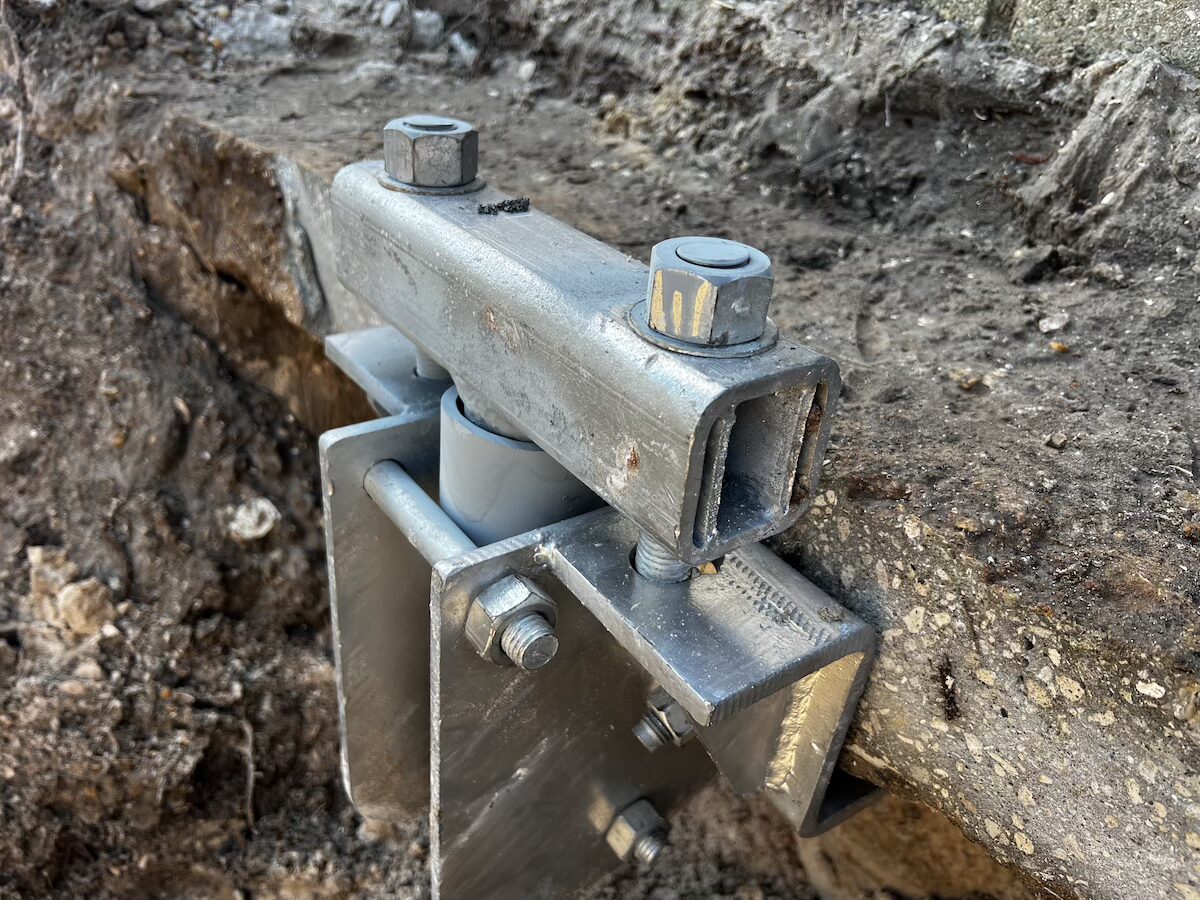
Micropiles are frequently used to increase the load capacity of aging or underperforming foundations. They’re a preferred method for seismic retrofitting, structural remediation, or when repurposing existing buildings for new loads or uses.
Tower and Pole Foundations
From telecommunications towers to utility poles, micropiles can be installed in difficult-to-reach or low-clearance areas. Their adaptability and deep anchoring make them ideal for resisting tension and compression forces on tall structures.
Slope Stabilization
In areas prone to landslides or soil movement, micropiles provide long-term slope reinforcement. When traditional retaining walls aren’t feasible, micropiles offer a flexible, minimally invasive alternative that stabilizes terrain with precision.
Key Advantages of Micropiles
Choosing micropiles isn’t just about size—it’s about performance, flexibility, and long-term value. Here are the primary benefits of working with Coastal Foundation Solutions on your next micropiling project:
Minimal Site Disturbance
Micropile drilling creates negligible vibration and noise, making it ideal for work near sensitive structures, heritage buildings, hospitals, or schools.
Compact Equipment, No Engineered Pads Required
Micropiling rigs are small, agile, and lightweight. Most setups don’t require engineered working platforms, significantly reducing mobilization costs and site prep time.
Tight Access Installation
We operate a range of specialized rigs, including low-clearance and interior-access models. This allows us to install micropiles in basements, crawlspaces, and other restricted areas.
Minimal Spoils and Controlled Disposal
Compared to traditional caissons or auger piles, micropiles produce minimal spoil. In contaminated sites or indoor environments, this makes a huge difference for safety, cleanliness, and cost control.
Adaptable to All Ground Conditions
Micropiles can be installed in nearly any soil type, including soft clays, loose sands, or highly variable fill. They can even drill through obstructions like boulders, concrete, and debris without special tooling.
High Load Capacity
When socketed into competent bearing strata or bedrock, micropiles can handle large axial loads and moderate lateral forces—meeting or exceeding the performance of many traditional deep foundation systems.
Groundwater-Friendly
Micropile installation and structural capacity are unaffected by high water tables, making them ideal for flood-prone areas, waterfronts, or saturated sites.
Case Study
Project Snapshot: Key Details at a Glance
Location: Windstar Golf & Country Club, Naples, FL
Project Type: Clubhouse Expansion – Deep Foundation Installation
Client: Windstar Golf & Country Club
Completion: April 2025
Site Challenges: Coastal Soils and Groundwater Complexity
Unpredictable Coastal Geology in Naples
The subsurface beneath Windstar included soft sands, silts, and limestone layers at varying depths — conditions that make traditional pile systems difficult to install.
Why Conventional Piles Were Not Suitable
Driven and auger-cast piles posed issues with vibration, noise, and spoil displacement, making them unsuitable for an active clubhouse environment adjacent to Naples Bay.
Engineering the Solution: Grouted Pulldown Helical Pile System
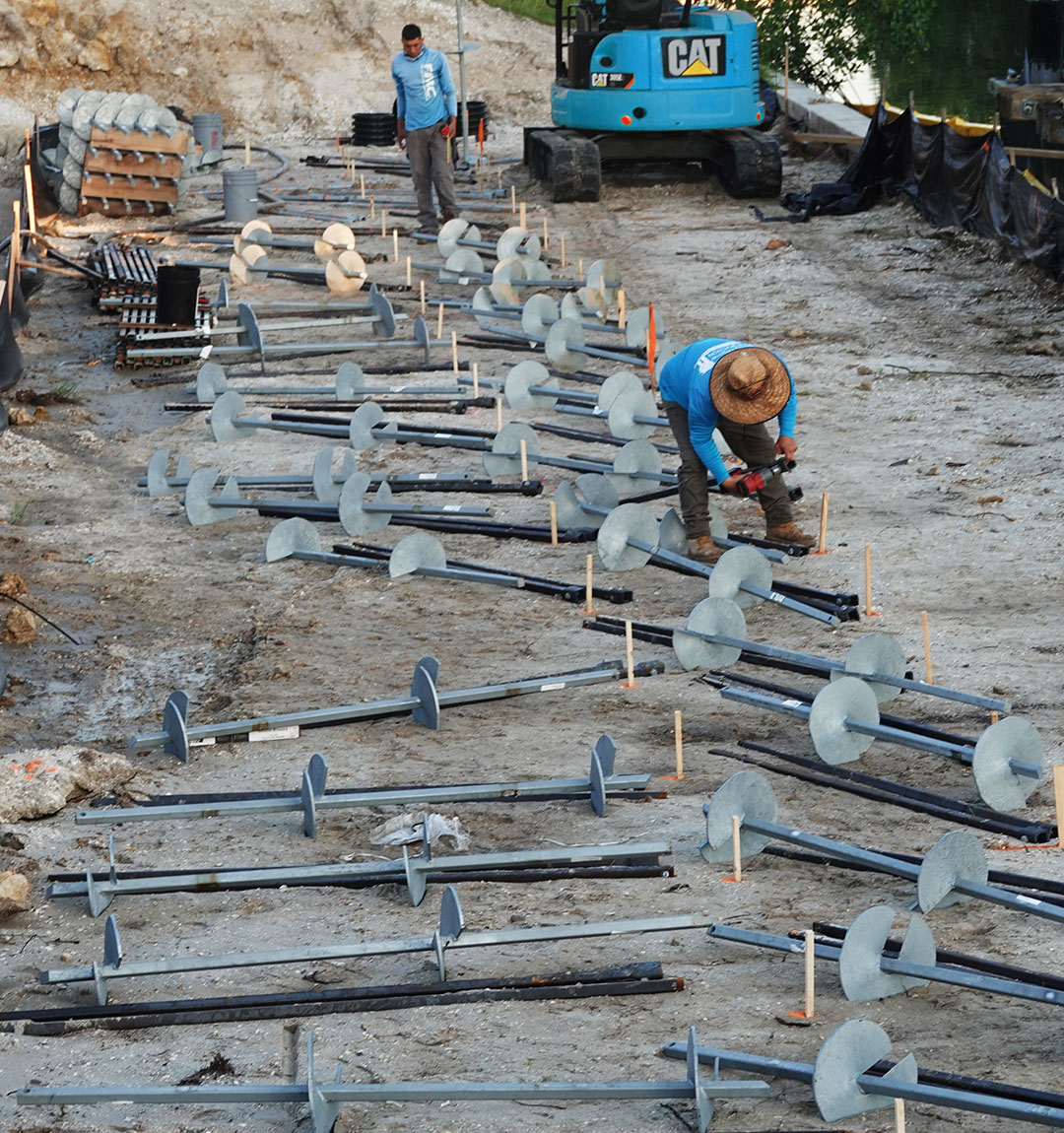
Coastal Foundation Solutions implemented the Grouted Pulldown Helical Pile System, a hybrid technology combining torque-driven helical installation with continuous grout encapsulation for exceptional load performance.
How Grouted Pulldown Helical Piles Work
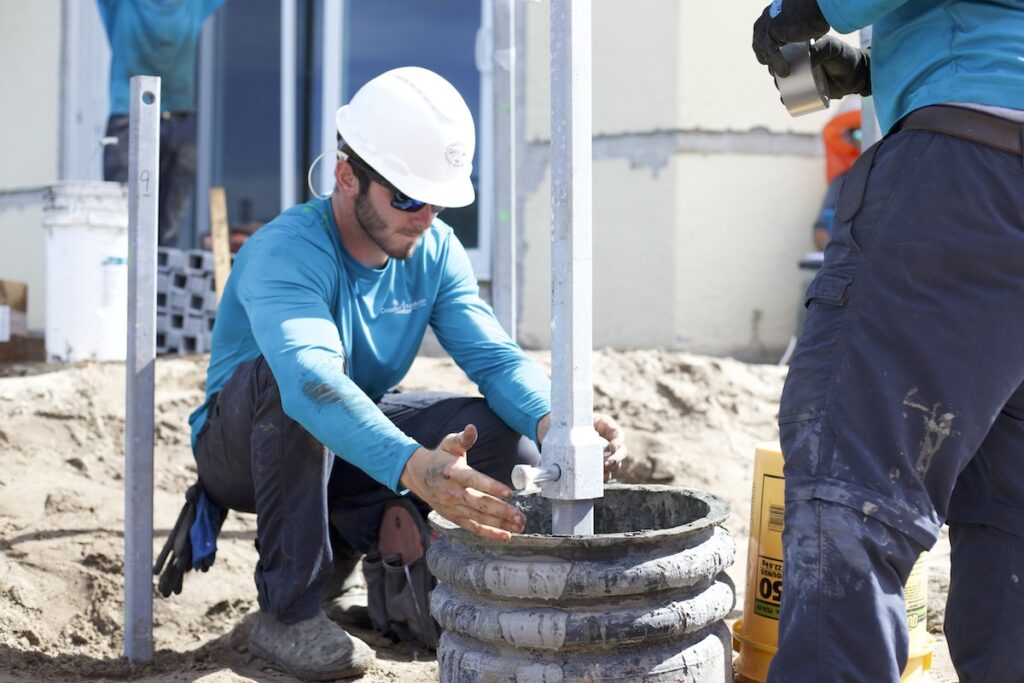
The system installs via torque-driven helical anchors that simultaneously form a grout column as the shaft advances. This creates a bonded pile element that resists compression, uplift, and lateral forces — ideal for coastal construction.
Step-by-Step Installation Process
- Load Testing & Design Verification – Preconstruction load testing confirmed 35-ton compression capacity at 38-foot depth.
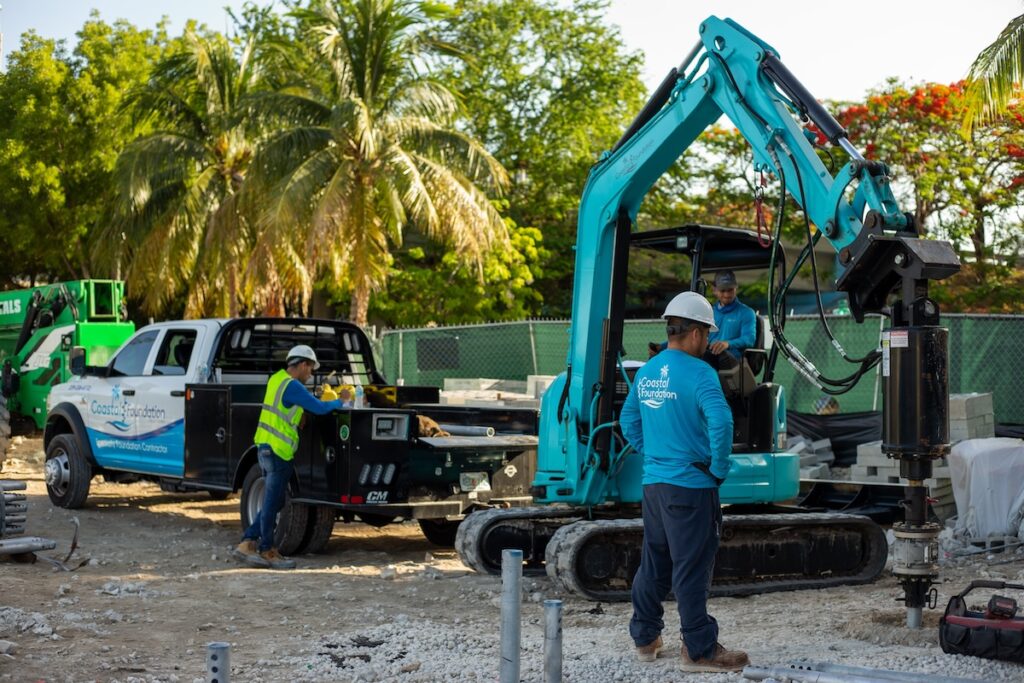
- Calibrated Torque Installation – Each of the 52 piles was advanced using 5,000 ft-lb torque heads for precise load control.
- Continuous Grout Column Creation – A 5-inch structural grout column was installed along each pile, enhancing skin friction and corrosion protection.
- On-Site Coordination – Work was performed adjacent to active facilities without disrupting daily club operations.
Benefits of the GPDH System in Coastal Projects
- Exceptional axial and lateral load performance
- Grout encapsulation shields steel shafts from saltwater corrosion
- Quiet, low-impact installation suited for operating structures
- Flexibility to adapt to limestone and groundwater variations
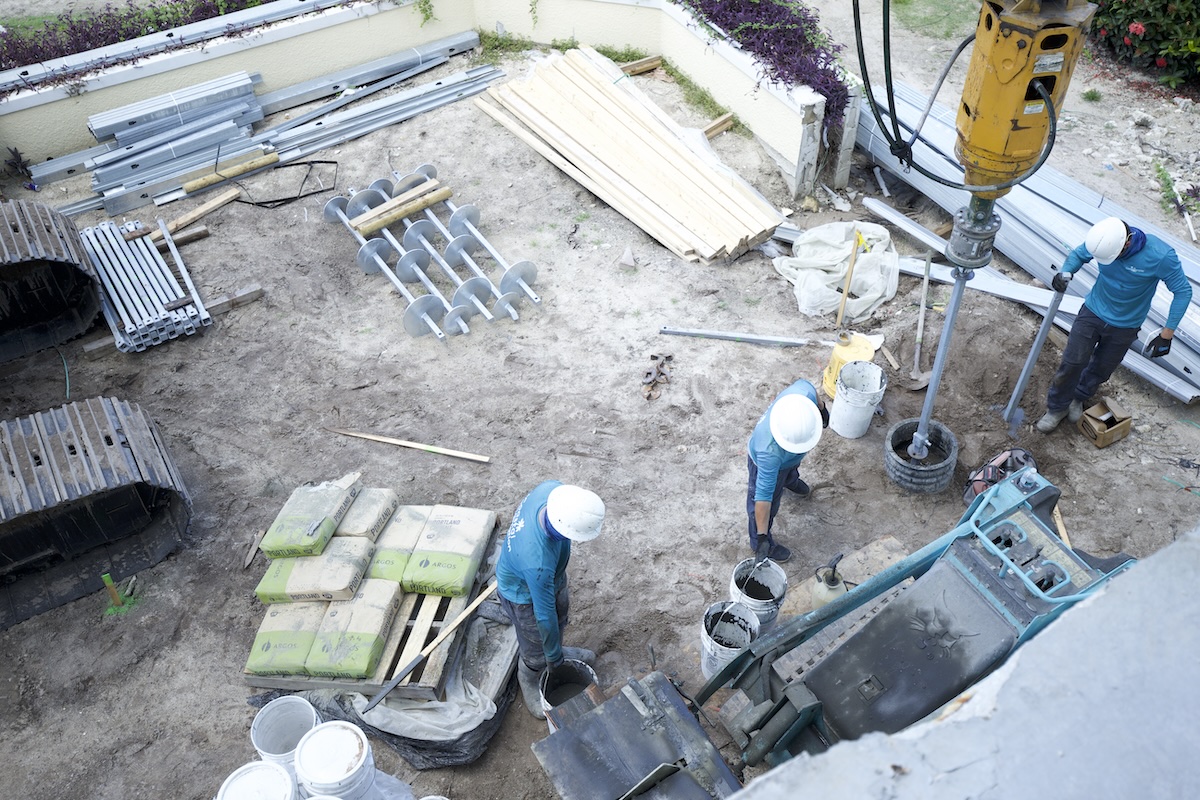
Real-World Performance Results
The Windstar project demonstrated the superior performance of grouted pulldown helical pilings in coastal conditions.
- ✅ 52 GPDH piles installed to depths between 34–40 feet
- ✅ Verified load capacity exceeding 35 tons per pile
- ✅ Zero groundwater contamination or vibration-related damage
- ✅ Corrosion-resistant design ensuring long-term structural integrity
This installation delivers permanent stability for the expanded clubhouse, protecting against settlement, erosion, and hydrostatic uplift.
Materials and Equipment Used
- ECP Grouted Pulldown Helical Pile System
- SS175 Shaft Assemblies with 8”, 10”, and 12” helix configuration
- 5-inch continuous grout column
- Galvanized and epoxy-coated steel components for marine durability
Our Process: Engineering-Driven, Field-Tested
At Coastal Foundation Solutions, we don’t believe in one-size-fits-all. Every micropile we install is the result of collaborative engineering, detailed analysis, and experienced field execution.
- Consultation & Site Assessment
Our team works closely with owners, contractors, and engineers to evaluate site constraints, load requirements, and existing conditions. - Custom Design & Engineering Support
With licensed structural and geotechnical engineers in-house, we deliver optimized pile designs tailored to your project’s exact needs. - Specialized Equipment Deployment
We select from a fleet of agile and powerful drilling rigs to suit the space, access, and ground conditions at your site. - Installation & Testing
Micropiles are installed quickly and efficiently with real-time monitoring and quality control. Load tests can be performed as required for assurance. - Turnkey Project Completion
We provide full documentation, as-builts, and post-installation reporting—ensuring smooth handoff and compliance with all relevant codes.
Real-World Results:
Projects That Build On Success
- Urban Infill Construction – In a dense downtown corridor, our micropiles enabled deep foundation support within inches of neighboring structures—with zero vibration and no excavation required.
- Historic Structure Retrofit – We strengthened the foundation of a 100-year-old building by installing interior micropiles through the basement floor, all without disrupting the exterior envelope.
- Remote Tower Installation – For a rural communications tower, micropiles were used in steep, rocky terrain where traditional equipment couldn’t access—installed on-time and on-budget.
Micropile Installation – Frequently Asked Questions
What are micropiles used for?
Micropiles are used to support structures where traditional foundations are not suitable due to poor soil conditions, limited access, or existing buildings. Common applications include new construction, foundation retrofits, slope stabilization, and tower installations.
How deep can micropiles be installed?
Micropiles can be installed to depths ranging from 2 meters (6 feet) to over 90 meters (300 feet), depending on the soil profile and load requirements. Their modular design allows extensions to reach stable bearing layers or bedrock as needed.
Are micropiles suitable for residential foundations?
Yes. Micropiles are an excellent option for residential foundations, especially in areas with poor soil, high water tables, or tight access. They cause minimal vibration and disturbance, making them ideal for working around existing homes or additions.
Can micropiles be installed indoors or in low-clearance areas?
Absolutely. One of the key advantages of micropiles is their ability to be installed using compact, portable equipment that fits through doorways and works inside buildings, crawlspaces, or under low ceilings.
What are the main benefits of micropiles over traditional piling systems?
Micropiles offer several advantages:
- Minimal vibration and noise during installation
- Smaller equipment footprint
- Adaptability to all ground conditions
- Suitable for sites with limited access or environmental restrictions
- Efficient spoil containment, especially in contaminated or indoor environments
Let’s Talk Micropiles
If you’re planning a project that demands deep foundation performance in a tight or tricky site, micropiles may be the ideal solution. At Coastal Foundation Solutions, we combine advanced engineering with field-tested expertise to deliver micropile systems that perform—safely, efficiently, and reliably.
Contact us today to schedule a consultation, request pricing, or learn how our micropiling services can support your next project from the ground up.
Let’s Talk Micropiles
If you’re planning a project that demands deep foundation performance in a tight or tricky site, micropiles may be the ideal solution. At Coastal Foundation Solutions, we combine advanced engineering with field-tested expertise to deliver micropile systems that perform—safely, efficiently, and reliably.
Contact us today to schedule a consultation, request pricing, or learn how our micropiling services can support your next project from the ground up.