
Bonita Beach Foundation Stabilization:
Engineering Coastal Strength and Foundation Resilience
Stabilizing Bonita Beach: How Engineering Precision Restored a Coastal Foundation
Coastal Foundation Solutions engineered a precision underpinning and foundation stabilization system for a beachfront residence in Bonita Beach, Florida. Using helical micro pulldown piles and advanced dewatering controls, the team restored full structural stability to a home impacted by Hurricane Ian’s surge and erosion forces—all with minimal environmental disruption.
Project Information
- Location: Bonita Beach, Bonita Springs, Florida
- Project Type: Foundation Underpinning & Stabilization
- Client: Private Beachfront Homeowner
- Completion Date: March 2025
Geotechnical Assessment and Project Background
Bonita Beach, part of the greater Bonita Springs coastal region, faced widespread foundation and structural challenges following Hurricane Ian (2022). The area’s high-water table, coastal erosion, and limestone substrata created a difficult environment for homeowners addressing post-storm instability.
Coastal Foundation Solutions was contacted by a homeowner whose beachfront residence exhibited progressive settlement and soil displacement from storm surge, groundwater intrusion, and foundation shifting. The project required a custom-engineered underpinning plan that would permanently stabilize the structure while protecting the sensitive coastal environment.
Following geotechnical testing and soil borings, engineers identified fluctuating soil densities and shallow limestone resistance zones typical of Bonita Springs. The findings confirmed that helical micro pulldown piles offered the most effective, low-impact solution—providing deep, corrosion-resistant support while minimizing surface disruption.
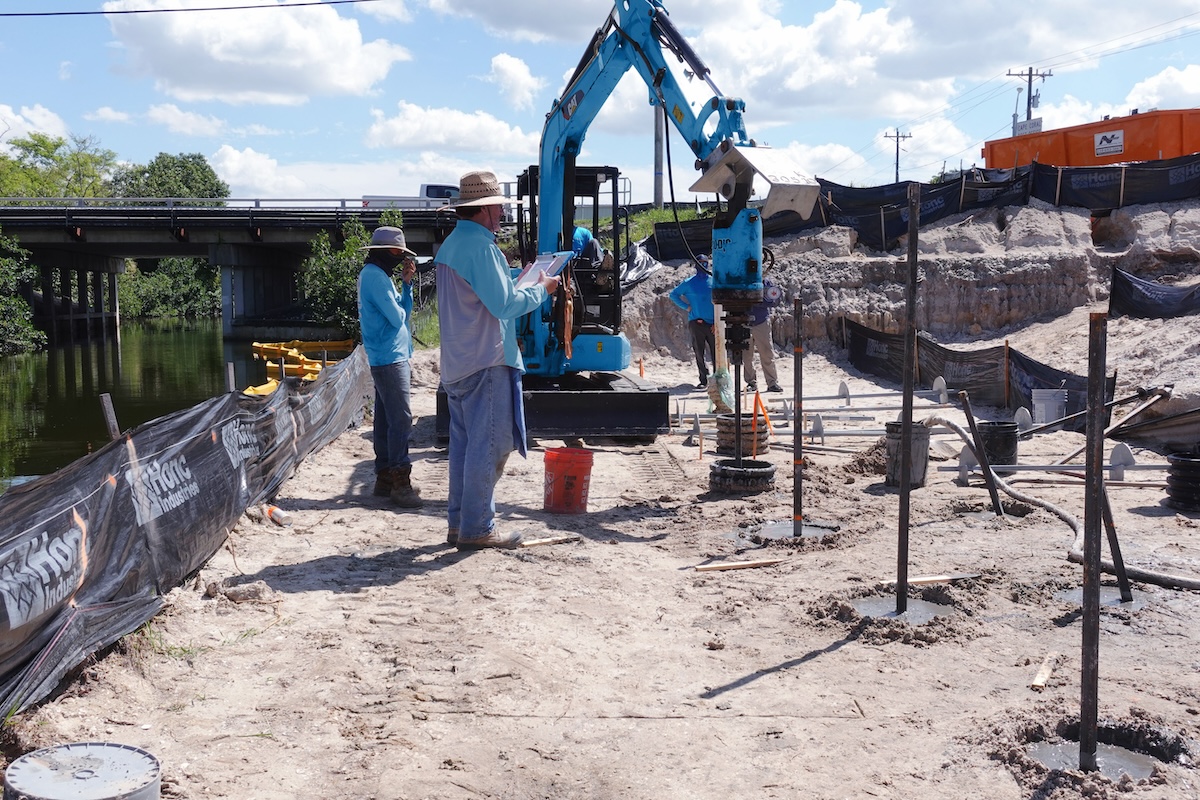
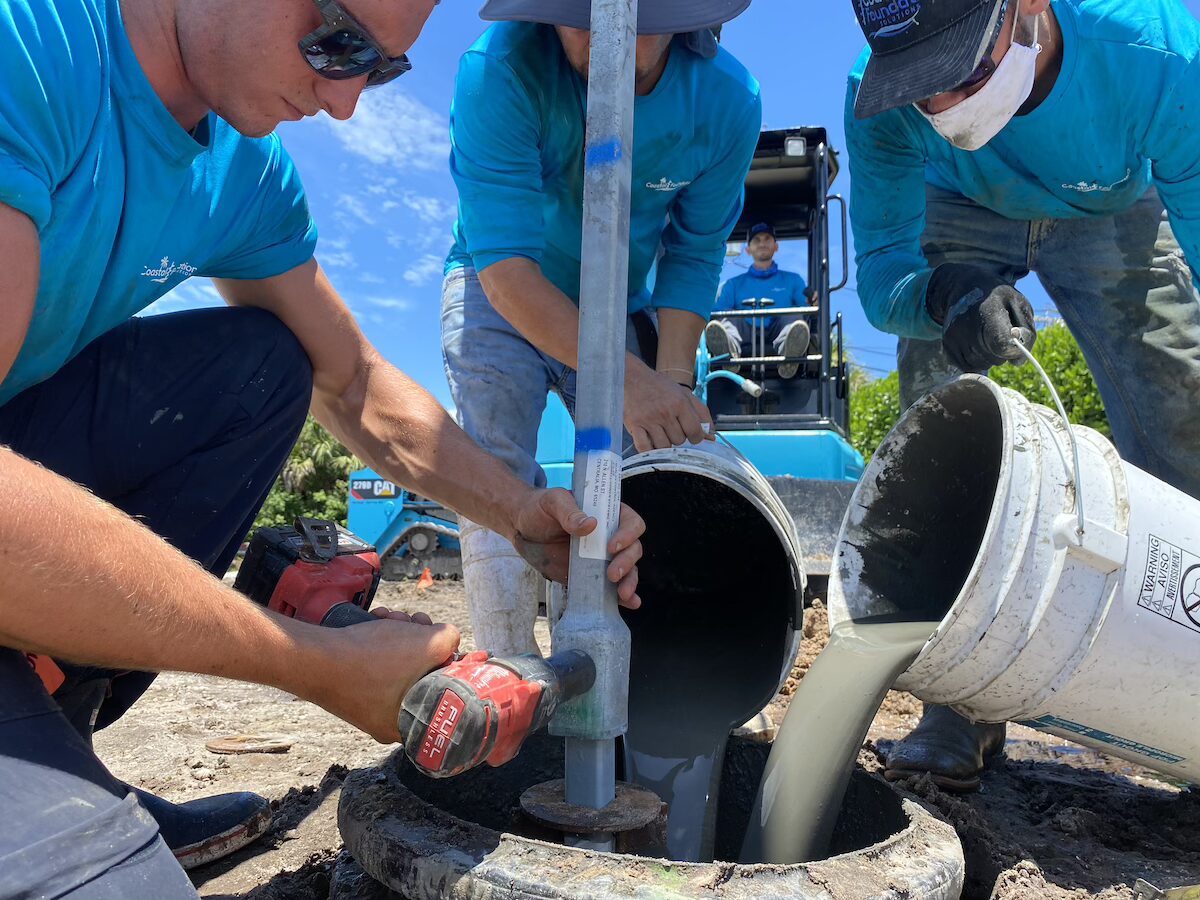
Engineered Solution: Helical Micro Pulldown Pile Installation
To verify performance under Bonita Beach’s challenging soil profile, Coastal Foundation Solutions conducted an on-site static load test in March 2023:
- Test pile achieved 32 tons compression capacity at 34 ft depth
- Torque reading of 4,800 ft-lbs. ≈ 24 tons compression
- Added 5-inch grout column increased strength by 8 tons (total ≈ 0.592 KIPS)
With proven design parameters, installation proceeded under strict engineering oversight.
A total of 48 underpinning piles were installed:
- 28 exterior piles reinforced perimeter foundations
- 20 interior piles stabilized internal load points
During excavation, the crew managed significant groundwater infiltration beneath existing footers. Over 22 hours of controlled dewatering and excavation ensured a safe, dry workspace—essential for stability in Bonita Beach’s high-water environment.
Each pile was installed using precision torque monitoring to achieve target capacity without inducing lateral movement. When limestone bedrock caused refusal (“spin-out”), 16-inch helix extensions were added per the Engineer of Record’s design criteria.
Existing perimeter grade beams—approximately 30 in wide × 12 in deep, reinforced with #6 bars—were inspected and verified to allow efficient load transfer post-installation.
All work adhered to Florida Department of Environmental Protection (FDEP) coastal construction guidelines, ensuring zero impact to marine vegetation or adjacent canal structures.
Technical Insight: Engineering Design and Load Verification
Each pile installation was monitored using calibrated torque instrumentation to confirm design loads. Field data were logged and reviewed by the project engineer to verify compliance with ASTM D1143 load-testing standards. This ensured precise verification of compression capacity, lateral resistance, and long-term serviceability—critical for sustained performance in coastal soils.
Verified Structural Performance and Coastal Resilience Outcomes
- Immediate Foundation Stabilization — Settlement halted, restoring alignment and safety.
- Enhanced Load Capacity — Reinforced support zones improved total bearing performance.
- Corrosion-Resistant Construction — Galvanized steel ensures longevity in salt exposure.
- Precision Engineering — Torque calibration and refusal management achieved uniform load distribution.
- Minimal Environmental Disturbance — Low-vibration installation preserved neighboring structures and marine ecology.
This project exemplifies how modern underpinning technology and engineering precision combine to deliver long-term resilience for Florida’s coastal residences.
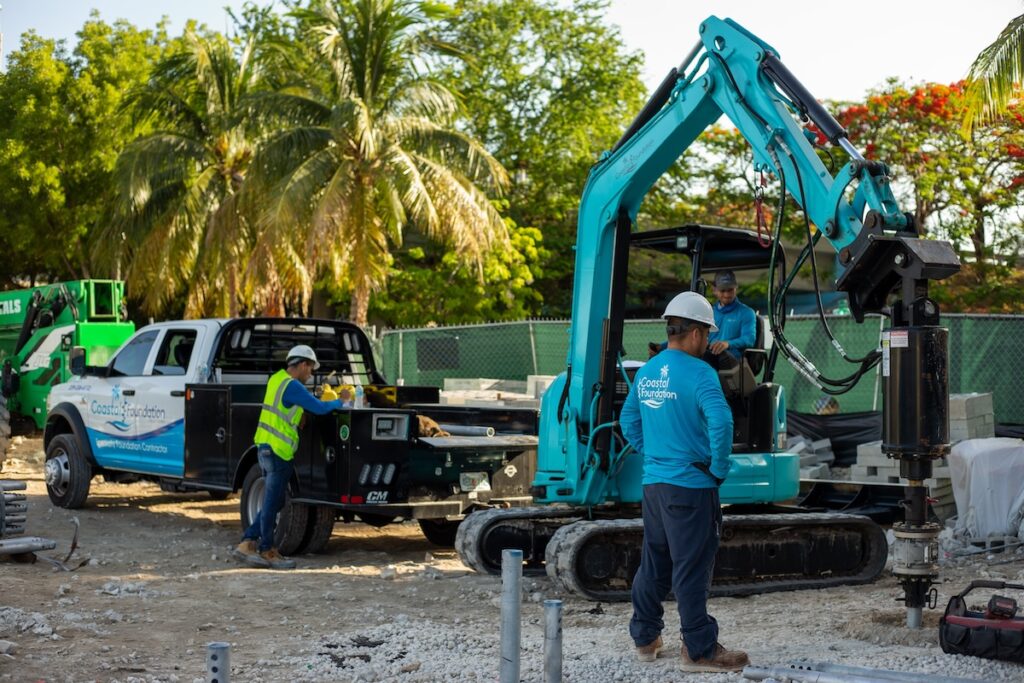
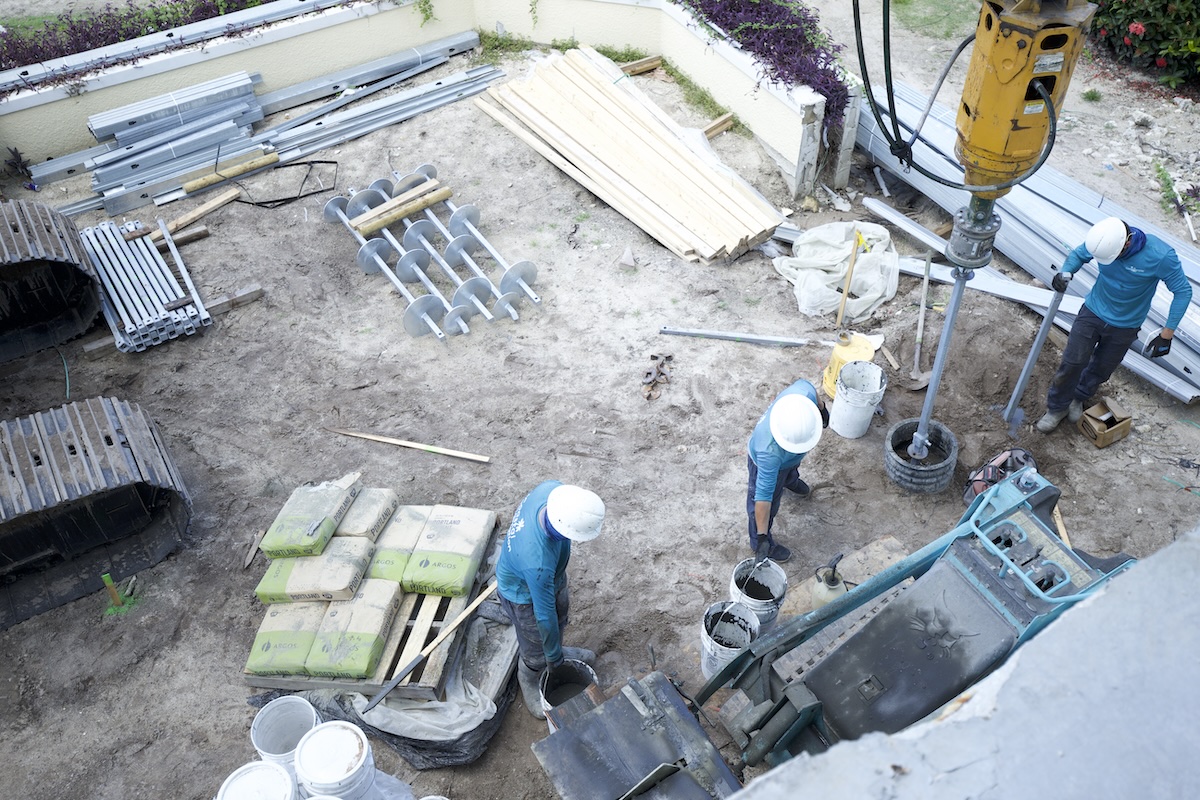
Key Project Metrics
Parameter | Value / Description |
Piles Installed | 48 total (28 exterior + 20 interior) |
Average Depth | 34 ft |
Achieved Capacity | 32 tons compression |
Torque Reading | 4,800 ft-lbs |
Grout Column | 5 in diameter / 8 tons added strength |
Completion | March 2023 |
Environmental Impact | Minimal – FDEP Compliant |
Products Used
- SS150 8″ × 10″ × 12″ by 76″L Helical Piles
- 16″ Helix Extensions for refusal conditions
- Galvanized Steel Components for corrosion resistance and durability
Building Florida’s Future on Solid Foundations
The Bonita Beach Foundation Stabilization Project showcases Coastal Foundation Solutions’ dedication to engineering excellence and environmental stewardship.
By integrating advanced helical piling systems, precision torque monitoring, and marine-grade materials, our team delivered a durable, sustainable foundation solution for a community rebuilding after Hurricane Ian.
From Cape Coral to Bonita Springs, Coastal Foundation Solutions continues leading in coastal foundation repair and structural restoration, protecting homes across Southwest Florida’s dynamic shoreline.
Engineering Answers About Foundation Stabilization in Bonita Beach, Florida
Why are underpinning piles critical for beachfront homes in Bonita Beach?
What causes helical pile “refusal” during installation?
Refusal occurs when piles meet dense limestone or compacted substrata that resist further penetration; engineers compensate with torque adjustments or helix extensions.
How does dewatering support coastal foundation work?
Lowering groundwater levels stabilizes soil during installation, ensuring accurate pile placement and structural safety in saturated coastal conditions.
Are galvanized piles suitable for saltwater exposure?
Yes—galvanized coatings protect against corrosion and oxidation, providing decades of reliable performance in marine environments.
How long will an underpinning system last?
Properly designed galvanized helical systems typically perform 50 years or longer, even under coastal exposure conditions.
Rebuild Strong. Protect for Decades
If your beachfront or waterfront property in Bonita Beach or Bonita Springs shows settlement, erosion, or foundation stress, Coastal Foundation Solutions can help.
Our certified specialists provide custom-engineered, corrosion-resistant underpinning systems built for Florida’s coastal geology.